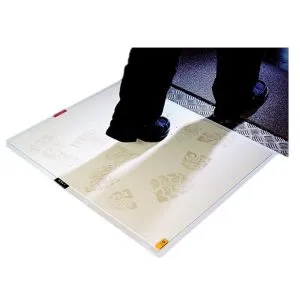

Walls, ceilings and benches get all the planning attention, yet the floor is where people spend the whole shift. Every step builds charge, and the surface underfoot decides whether that charge drains away or stays put. Choosing the right ESD flooring early saves redesign work, awkward compromises and expensive disruption later. Treat it as part of the design, not an afterthought.
Why Floors Matter More Than You Think
A technician walking on ordinary vinyl can generate a surprising voltage with each step. Add rubber-soled shoes and dry air, and the numbers rise quickly. The floor and footwear form a pair, and both need to cooperate to drain charge safely to earth. Neither works well alone. That partnership is easy to overlook.
Many facilities rely only on wrist straps and ignore the floor. That works for seated tasks, but it fails the moment someone stands up and walks. People move constantly, carry trays, answer calls and fetch parts. A controlled floor protects them during every one of those unplanned journeys. Walking is when risk is highest.
Rolls, Coatings and Tiles Compared
Sheet or roll flooring gives a seamless look and suits large, permanent areas. Coatings can refresh an existing concrete floor but need careful preparation. Both options usually involve downtime, specialist installers and a firm commitment, which is fine for a new build but harder for an occupied site. Weigh the disruption before you decide.
Modular anti static floor tiles take a different approach. They can be laid over a clean, flat existing floor, can be cut around obstacles and are easy to lift if layouts change. For a small lab or a rented unit, that flexibility often outweighs the appeal of a poured, seamless surface. Ask what your lease allows first.
Questions to Ask Before You Buy
Start with how the area is used. Heavy trolleys, chemical spills and constant foot traffic all demand durability. Ask for the resistance range and how it is verified, then check the data sheet against the standard you follow. Vague claims should raise questions. Good suppliers answer them without hesitation. Write your questions down before the call.
Consider grounding too. A floor performs only when it connects properly to earth, usually through copper strips or dedicated points. Ask who will install it and who will test it afterwards. A beautiful floor that is not grounded is just a floor. Insist on test records at handover, and keep them for audits.
Living With Your Floor Day to Day
Cleaning changes performance. Wax polishes and ordinary detergents can leave an insulating film that blocks the very path you paid for. Use cleaners recommended for static control and follow the dilution instructions carefully. A weekly routine is better than an occasional deep scrub. Tell the cleaning contractor about these rules in writing. Staff change; instructions should not.
Test the floor regularly with a suitable meter and record the readings. Wear, dirt and heavy equipment can all shift results over the years. Catching a drift early lets you clean, repair or replace a section before a whole area slips out of compliance. Map the test points so repeats are consistent. Trend lines tell a clearer story.
Matching the Floor to the Business
A busy assembly hall, a repair counter and a clean room each need different things. Think about budget, hours of use, cleanliness and how often the layout might change. The cheapest option rarely stays cheapest once repairs and downtime are counted. Run the numbers over five years, not one. Total cost tells the honest story.
Plan for growth as well. If you expect to add benches or move production, a flexible surface keeps options open. If the room will stay the same for a decade, a seamless finish may reward the larger investment. Match the flooring to the future, not just the present. Talk to the people who will work on it every day.
Conclusion
A floor is never just a floor in a static-sensitive workplace. It is part of your protection system, working quietly with every step. Pick it with care, install it properly, clean it correctly and test it regularly. Do those four things, and it will serve you for years.
When you are ready to compare options, visit elcomltd.com, look through the flooring range and ask the team which surface suits your space. A short conversation now avoids costly surprises later.